
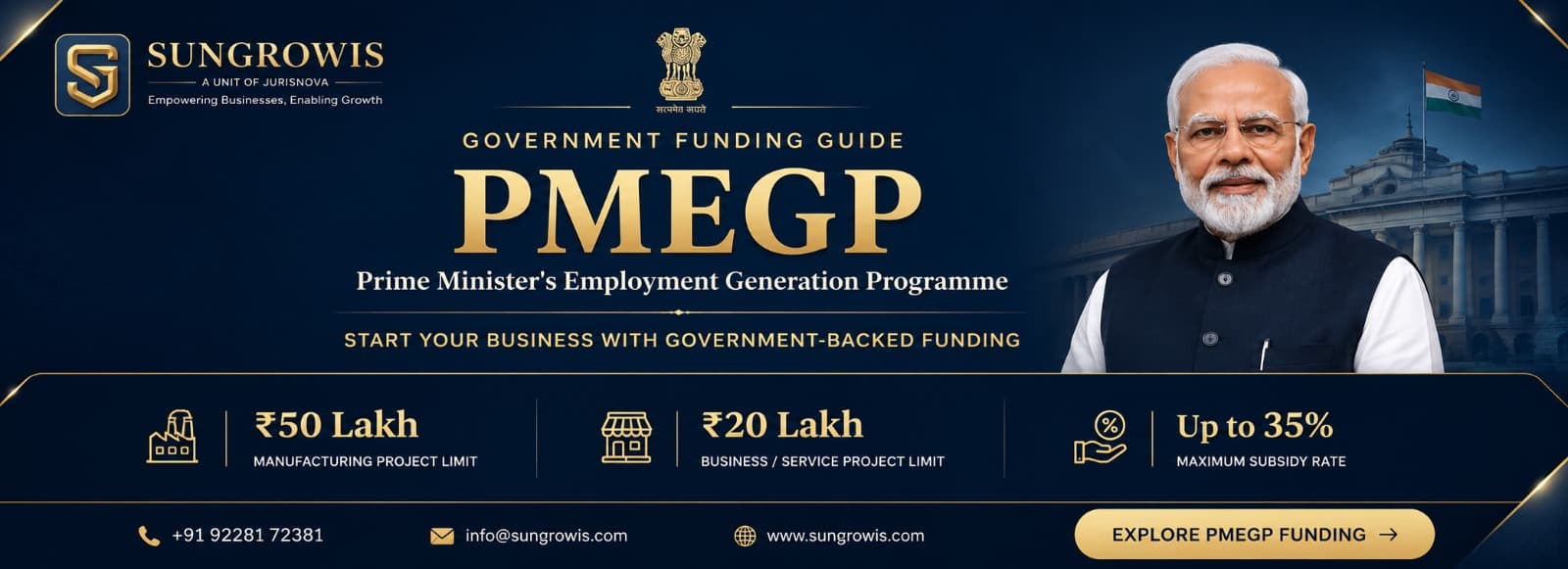
PMEGP Scheme: A Practical Guide for Entrepreneurs
The Prime Minister's Employment Generation Programme (PMEGP) is a credit-linked subsidy programme designed to support new micro-enterprises in the non-farm sector and generate sustainable employment opportunities.
What is PMEGP?
PMEGP is a government-backed credit-linked subsidy programme implemented nationally through KVIC, with state implementation involving KVIC Directorates, KVIBs, DICs and participating banks. The programme focuses on creating new micro-enterprises and employment opportunities.
How PMEGP Works
PMEGP combines bank finance with a margin-money subsidy mechanism to help eligible entrepreneurs establish new micro enterprises.
PMEGP is intended to encourage self-employment by helping eligible applicants establish viable micro-enterprises in rural and urban areas. KVIC acts as the nodal agency at the national level, while state agencies and banks participate in implementation.
The applicant contributes a prescribed portion of the project cost, while the remaining requirement is structured through bank finance and the applicable margin-money subsidy.
PMEGP Subsidy Rates
The subsidy depends on beneficiary category and whether the project is located in an urban or rural area.
| Category | Own Contribution | Urban Subsidy | Rural Subsidy |
|---|---|---|---|
| General Category | 10% | 15% | 25% |
| Special Category | 5% | 25% | 35% |
Special categories include groups such as SC/ST, OBC, minorities, women, ex-servicemen, transgender applicants, differently abled applicants and specified NER, hill, border and other notified categories, subject to applicable rules.
How Much Funding Can PMEGP Support?
The current Ministry of MSME information lists different maximum admissible project costs for manufacturing and business/service activities.
Manufacturing
₹50 Lakh
Maximum admissible project/unit cost for manufacturing under the current PMEGP information.
Business / Service
₹20 Lakh
Maximum admissible project/unit cost for business and service activities under the current scheme information.
Who Can Apply for PMEGP?
Eligibility depends on the applicant, proposed activity, project structure and compliance with scheme conditions.
Applicant must generally be an individual aged 18 years or above.
PMEGP assistance for new enterprises is intended for new projects sanctioned specifically under the scheme.
For projects above ₹10 lakh in manufacturing or ₹5 lakh in business/service, the applicant should have at least VIII standard qualification.
Existing units that have already received government subsidy under another government scheme are generally not eligible for a new PMEGP unit.
The project should have eligible capital expenditure; projects without capital expenditure are not eligible.
New PMEGP units are required to be registered on the Udyam portal before physical verification and margin-money adjustment.
Documents Usually Required
The exact checklist depends on your applicant profile, project and financing institution.
PMEGP Application Process
A strong application starts with a realistic business plan, correct documentation and a properly structured project proposal.
Business Assessment
We understand your business idea, investment requirement, sector, location and funding objective.
Project Report
A structured project report is prepared around the proposed business model, project cost, revenue assumptions and funding requirement.
Application Filing
The application and supporting documents are organized for submission through the applicable PMEGP process.
Bank Coordination
The proposal moves through the financing process, with documentation and follow-up support during the credit assessment.
Sanction & Funding
Once approved, the applicable bank finance and margin-money subsidy process proceeds according to scheme rules.
PMEGP applications should be made through the official scheme process and applicable implementing agencies. Sungrowis can assist with preparation, documentation, project report structuring and coordination, but final approval remains subject to the applicable authority and financing bank.
Sungrowis Support
Need Help With Your PMEGP Application?
Preparing a PMEGP application involves more than simply filling a form. The proposed business activity, project cost, contribution, documents and project report should be aligned properly. Our team can help you understand the process and prepare your application documentation.
Frequently Asked Questions About PMEGP
Quick answers to common questions entrepreneurs ask before starting a PMEGP application.
What is PMEGP?
PMEGP stands for Prime Minister's Employment Generation Programme. It is a credit-linked subsidy programme designed to support new micro-enterprises in the non-farm sector.
What is the maximum PMEGP subsidy?
The subsidy rate can reach 35% for eligible special-category beneficiaries in rural areas. General-category beneficiaries can receive 15% in urban areas and 25% in rural areas, subject to scheme conditions.
Can I apply for PMEGP for an existing business?
The new-unit PMEGP assistance is intended for new projects. Existing PMEGP/MUDRA units may have a separate second-loan/upgradation route subject to the applicable conditions.
Is a project report required?
A properly structured project proposal/project report is an important part of presenting the business plan, project cost, financing requirement and viability of the proposed unit.
Does PMEGP guarantee loan approval?
No. PMEGP support does not mean automatic loan approval. The financing bank and applicable implementing authorities evaluate the proposal according to the scheme and lending requirements.
Official References
Scheme information should always be checked against the latest official PMEGP / Ministry of MSME guidelines before applying. This article is intended for general information and does not constitute a guarantee of subsidy or loan approval.
